DONATION"You could get arrested": A teenager who wanted to help a campaign, and the fight to be heard - ARTICLE - LEDGE, a specialist team for public interest litigation
"You could get arrested": A teenager who wanted to help a campaign, and the fight to be heard
The Lawsuit for Under-18s' Freedom to Engage in Election Campaigning is scheduled to hold its final oral argument at the Tokyo District Court on July 8. We spoke with a plaintiff who has been raising his voice for "the society I want to live in" ever since junior high school, about what he hopes to convey through the courts.
SHARE
*Translated by AI
It happened shortly before a certain city council election.
A (17), who had a candidate he wanted to support, was helping with the candidate's activities in the period before the official campaign began. Then, out of nowhere, a staffer from the opposing camp relayed a message through the candidate's own staff:
"That's illegal. You could get arrested."
What he was being told was this: that a minor engaging in election campaigning breaks the law.
At the time, A was in the third year of junior high school. No adult had asked him to help, and he was not plotting anything. He had simply been watching over a candidate he had decided he wanted to support — a candidate speaking to citizens out on the street.
"I was so scared. I couldn't understand why I was being told something like that. I've never been able to forget how frightened I felt, and after that I kept my distance from elections."
The Public Offices Election Act bans election campaigning by anyone under 18 entirely, and sets out severe penalties for it.
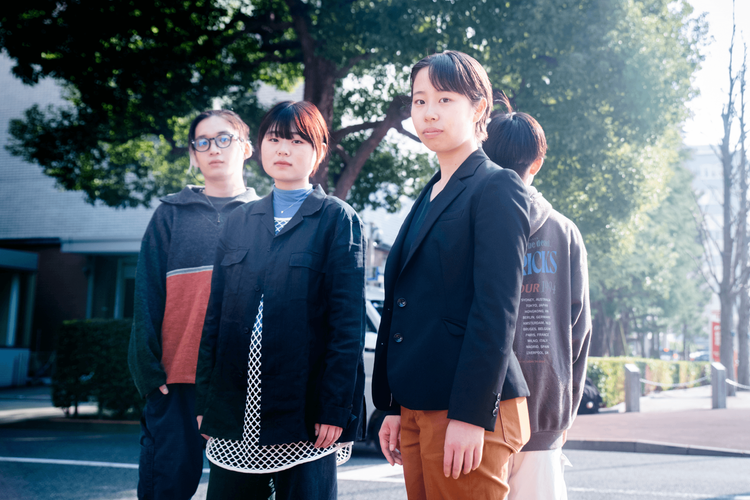
The Lawsuit for Under-18s' Freedom to Engage in Election Campaigning, brought by LEDGE, was filed with four plaintiffs who were high school students at the time, seeking to abolish this unreasonable rule in a case against the State. A is one of those four plaintiffs — and, nearly a year and a half after the case was filed, the only plaintiff who is still a minor.
For "the society I want to live in"
A first took an interest in elections the year before that city council election. It was during the ward mayoral election held in his home ward of Shinjuku, when A was in the second year of junior high school.
Raised from a young age in a household where his parents would exchange views on politics and society while watching the news, A came to think naturally about "the society I want to live in."
He wanted to close the gaps between people. He wanted to change the dark sense of stagnation hanging over society. The faces of friends who, since elementary school, had sought a place to belong in Kabukicho's "Toyoko" district — the area beside the former TOHO cinema building — also came to mind.
Children each carried their own different pain and loneliness: parents who did not get along, financial hardship, violence experienced even in the places they had reached out to for help. A wanted these children to be protected, not "cracked down on." That was the kind of town A wanted to live in.
So when A came across a candidate whose pledges included "free school lunches for elementary and junior high schools," and who declared in a street speech, "The Toyoko kids are Shinjuku's children. Of course they should be people we support and protect," A immediately felt: "I want to support this person."
"I felt like I'd met someone who said everything I'd been wanting for Shinjuku. Hearing that speech was the moment politics became something that was about me."
"It's my life too" — yet minors are shut out of elections
A went straight to the candidate to ask directly: "Please let me help." But the answer he got back was a shock.
"Thank you. But minors aren't allowed to help with elections."
I live in this town too. This is about me and the friends close to me. And yet, learning that he couldn't take part in an election simply because he was a minor, A "felt terribly sad," he recalls.
Still, A didn't give up, and reasoned that helping out before the campaign period officially began should be fine — which is what led to the attempt at the following year's city council election.
"Until then, I couldn't even vote yet, and I felt guilty that I was just standing in a safe place thinking 'I want to do something' without actually doing anything."
"So when I met a candidate I felt I could entrust my own hopes to, and I got to help alongside them, it felt like I was taking part in making society even a little bit better — like I was contributing — and it was so much fun."
That sense of "contributing," which he had finally managed to grasp, was cut off all at once by the words from the opposing camp.
Elections weren't the only time A felt this frustration. When he joined demonstrations against the increase in defense spending decided by the Cabinet and against the redevelopment of Jingu Gaien, he was met with looks that said, "Isn't someone making you do this?" and "There's no way junior high and high school students could understand politics."
"It really got to me that, just because I was a middle or high school student, all the thinking and all the worrying I'd done before deciding to act was treated as if it had never happened."
What is the Lawsuit for Under-18s' Freedom to Engage in Election Campaigning?
Here's how the system A and the others are fighting actually works.
The Public Offices Election Act defines acts carried out during an election period for the purpose of getting a specific candidate elected as "election campaigning," and does not permit minors to engage in such activities at all. Not only handing out flyers or making phone calls in the street, but even posting on social media in support of a specific candidate, or sharing such a post, may constitute "election campaigning."
What's more, anyone who violates this faces, for the minor themselves, "imprisonment of up to one year or a fine of up to 300,000 yen." On top of that, they lose the right to vote and the right to stand for election for up to five years. The same punishment applies to anyone who uses a minor to carry out election campaigning.
In this lawsuit, A and the others argue that the freedom to engage in election campaigning lies at the core of "freedom of political expression," which forms the very foundation of democracy, and that denying it to minors under 18 violates important rights guaranteed by the Constitution.
The State, for its part, argues that the purpose of this law is to prevent large numbers of minors from being mobilized in ways that would harm the fairness of elections, and to protect "those who are immature in mind and body."
The plaintiffs counter that the facts needed to support the legitimacy of such legislative aims do not exist in the first place.
They also argue that, to achieve the aims the State claims, it would be enough to crack down on the adults who mobilize minors — there is no need to strip away the "freedom of political expression" of minors who genuinely wish to lend their support of their own accord.
Furthermore, they point out that it is contradictory to punish the minors themselves when a violation occurs, all while claiming to "protect" them.
Bringing it to the court in my own words
In a statement A delivered to the court last May, he posed this question:
"I think it's wrong that we have to hold ourselves back from saying what we think. You silence middle and high school students who care about politics and even want to act on it — and then, the moment they turn 18, you say 'Go vote' and 'It's a problem that young Japanese people don't take part in politics.' Isn't that a contradiction?"
"As I took part in the trial and built up the arguments together with the legal team, it became clear that this law has no real basis. Hearing that, I felt genuinely frustrated."
"This law tied down what I could do and wore me out, so I found myself wishing I could get that time back."
At the seventh oral argument hearing, opening at 11:00 a.m. on July 8 at the Tokyo District Court, A and the other plaintiffs will once again deliver statements to the court. The district court is expected to conclude its proceedings that day.
The feeling A had on the day he wanted to support someone, for the sake of "the society I want to live in," was not wrong. On July 8, A is going to prove that to the court, in his own words.
"All of us plaintiffs have really worked hard on writing our statements, so I'd love for people to come and listen."
"I think everyone has little frustrations and nagging doubts in their daily lives. When that happens, each of us can try doing what we can to change society in the direction we hope for. I'd love to see that spirit spread further and further through this lawsuit."
"Public lawsuits" aim to change social irrationality through the power of the judicial system. LEDGE is a team of lawyers, researchers, campaigners, and other experts formed to support these public lawsuits. We work with all people who want to live their lives in a fair society, true to themselves, to change the law forward.
Through our articles, we share the background and key issues of public interest litigation aimed at solving social problems — as well as the voices of the plaintiffs who have spoken out, and the legal teams who support them.
Details and the latest information on [the Lawsuit for Under-18s' Freedom to Engage in Election Campaigning]([INSERT CALL4 URL]) featured here are available on CALL4's case page. We also ask for your support through our crowdfunding campaign, which makes thorough legal advocacy possible.