DONATIONChanging Lives, Changing Society: A Young Lawyer on the Fight to Lower the Candidacy Age - ARTICLE - LEDGE, a specialist team for public interest litigation
Changing Lives, Changing Society: A Young Lawyer on the Fight to Lower the Candidacy Age
Lawyer Yuri Mukai is taking on the Lawsuit for Lowering the Age of Candidacy as a member of the legal team, standing alongside plaintiffs of her own generation. Ahead of the appeal's first oral argument on June 22, we spoke with her about the hope she finds in the justice system and what this lawsuit means to her.
SHARE
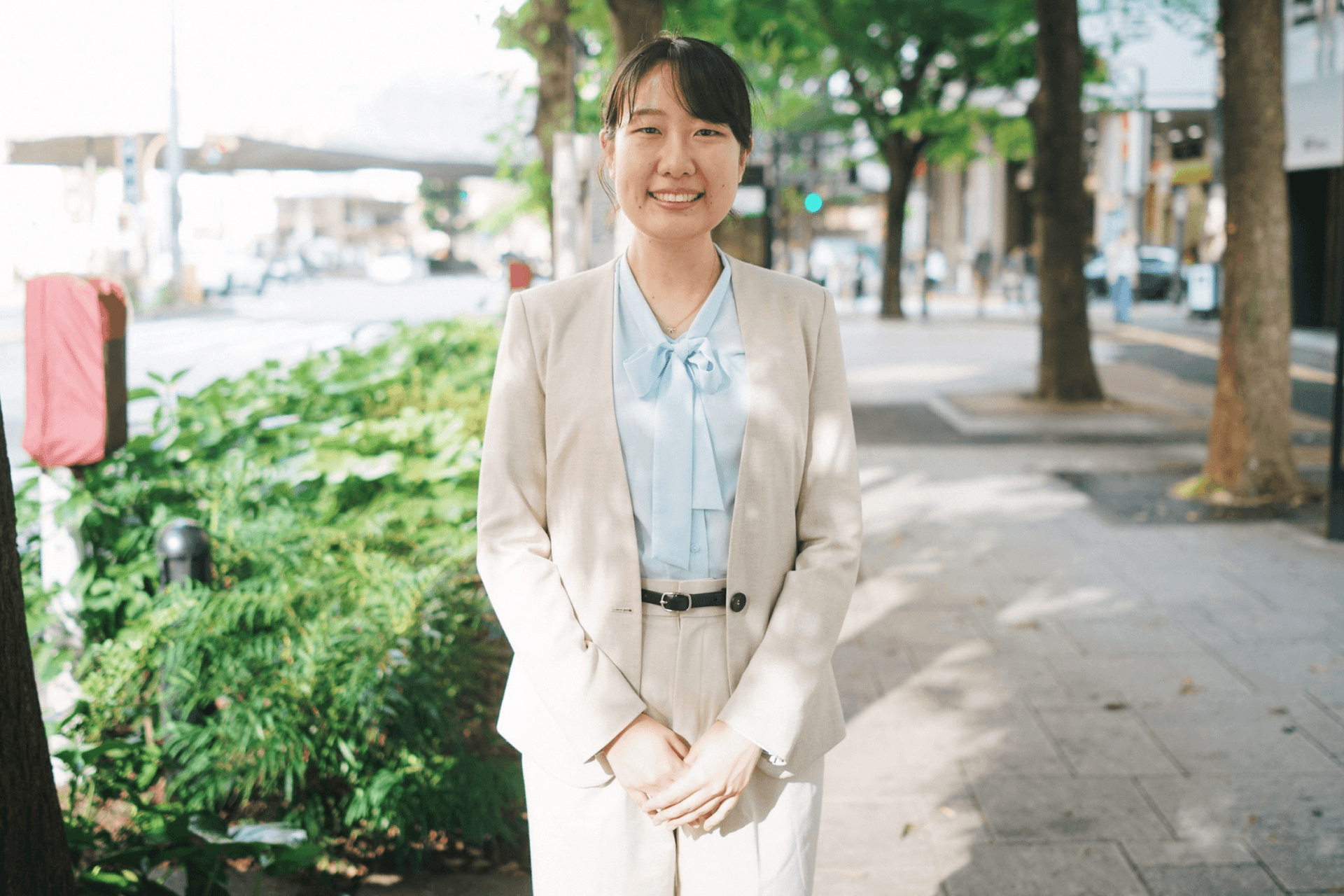
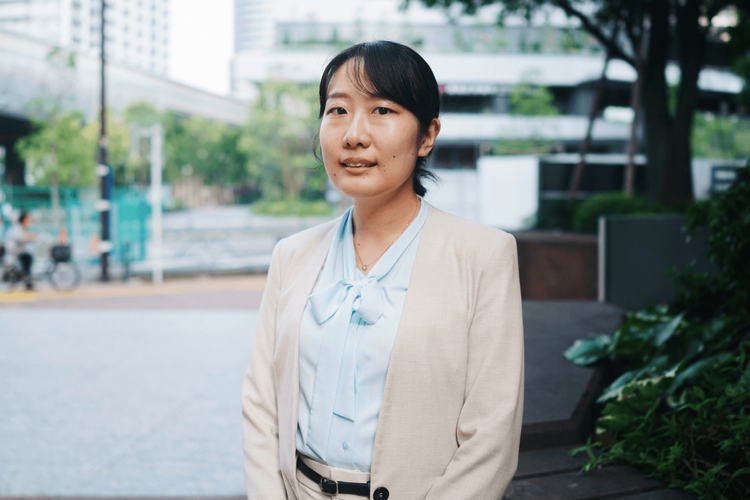
Yuri Mukai (28) spends her days at Tokyo Public Law Office, an urban public-service law office, facing a wide range of clients, while continuing the public interest litigation support she has pursued since her student years.
A little over a year into her career as a lawyer, she is now taking part in her first public interest case as a member of a legal team: the Lawsuit for Lowering the Age of Candidacy. Its first oral argument of the appeal will be held at the Tokyo High Court on June 22.
"I want to believe that through legal action, we can change both the difficulties faced by each individual and the broken systems of our society. Being able to believe that is itself a source of hope," she says. We spoke with Mukai about the power of the courts and the hopes she places in this lawsuit.
Delivering the Power of the Law
Since April 2025, Mukai has belonged to Tokyo Public Law Office, an urban public-service law office that describes itself as "a last-resort legal resource for citizens." Each day she works tirelessly on behalf of a wide variety of clients.
The cases she has handled so far range widely — from criminal cases tried before lay judges and workplace-accident cases, to support for people experiencing homelessness and people with disabilities, and family-law matters such as divorce and visitation for survivors of domestic violence.
"Many of our clients are people facing economic hardship, people with disabilities for whom communication is difficult, or foreign nationals — people who face barriers to accessing the justice system in the first place. We take on cases that other firms might turn away, and deliver the power of the law to those who need it. That is one of the roles our office plays."
It was in her second year of university that she set her sights on becoming a lawyer. During an internship at a law firm, she sat in on a press conference about a sexual harassment case and witnessed how, one after another, voices from others reporting similar harm came pouring into the office.
"That was the moment I felt that a lawyer is someone who can start from an individual's problem and then put a question to society — 'This is not just one person's problem; it is a problem for society, and society has to change.'"
From Public Interest Litigation Support to the Lawsuit for Lowering the Age of Candidacy
To deliver the power of the law to more people and make it something closer to their lives. That conviction is closely connected to the public interest litigation support she began as a student and continues today.
A collaborative event between NO YOUTH NO JAPAN and CALL4 planned by Mukai| Courtesy of CALL4
While in law school, she began working as an intern at CALL4, a web platform dedicated to supporting public interest litigation. Walking alongside plaintiffs and legal teams, she took on work such as conveying litigation information to the public in accessible ways, and launching and running an Instagram account to reach a wide audience among younger generations.
In the course of this work, in 2022 she planned a collaborative event with NO YOUTH NO JAPAN, a youth organization that aims to promote young people's political participation. Hoping that people in their twenties and thirties might also feel a sense of hope in public interest litigation, she organized a talk session under the theme "How Do We Build a Society Where Those Under 30 Can Become Politicians?", bringing together those directly affected, lawyers, and sitting legislators for a "strategy meeting."
It was out of the conversations born that day that the Lawsuit for Lowering the Age of Candidacy actually came to be filed, in July 2023.
What Is the Lawsuit for Lowering the Age of Candidacy?
The plaintiffs were six young people, then in their teens and twenties, including Momoko Nojo, who took the stage at the talk session as the representative of NO YOUTH NO JAPAN. They sued the state, arguing that the current system — which bars people from standing for election until they reach the age of 25 or 30 — violates the Constitution, which guarantees the right to stand for election.
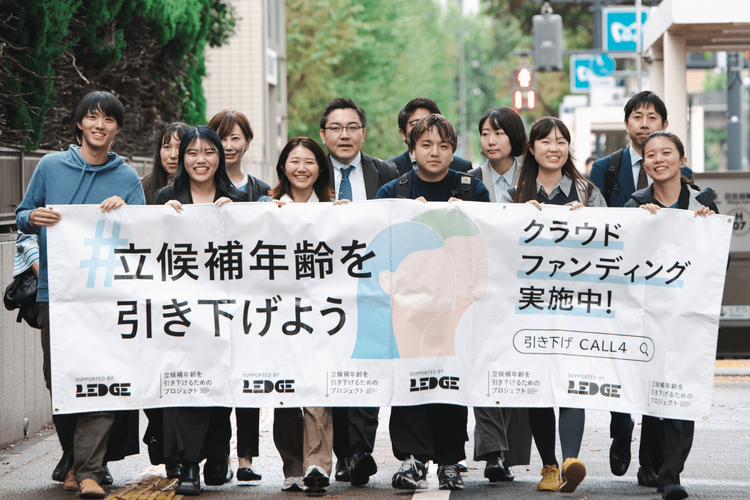
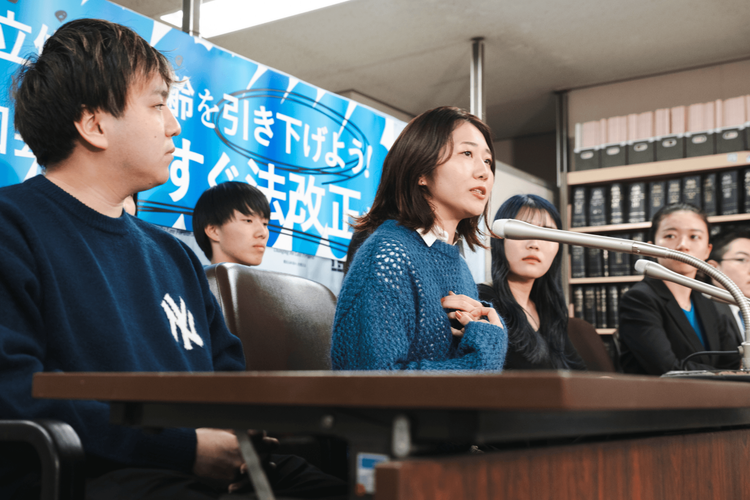
The plaintiffs and legal team of the Lawsuit for Lowering the Age of Candidacy | LEDGE (Photo: Maki Amemori)
The candidacy age requirements have remained unchanged for roughly 80 years since the end of the war, restricting young people's direct political participation. As a result, the legislature — which is meant to represent the diverse people who make up society — has no members who can speak for younger generations. Meanwhile, among OECD member states, 33 of 38 countries allow people to stand for election from the age of 18 or 21 (as of October 2025).
So why must the age be 25 or 30 in Japan? No one, the plaintiffs suggest, can offer a rational reason for it.
The state, for its part, countered that it is reasonable to grant the right to stand for election only from the higher ages of 25 and 30, rather than from 18, the age at which the right to vote is acquired, "in light of the thoughtfulness and discernment that come from social experience."
But the state's claim that young people lack "thoughtfulness and discernment," the plaintiffs argue, has no basis and rests on assumptions and prejudice. Moreover, who is fit to be a politician should not be restricted uniformly by age at the point of candidacy; rather, voters should decide through elections. This has been the plaintiffs' consistent argument.
Plaintiffs Who Spoke in Court on Behalf of Young People
Momoko Nojo (center), plaintiff in the Lawsuit for Lowering the Age of Candidacy | LEDGE (Photo: Maki Amemori)
At the time of the first oral argument, Mukai was still studying for the bar exam, and she remembers attending the hearing from the public gallery.
Whether someone can become a governor, or a member of an assembly, is for the voters to choose. But when it comes to restricting candidacy by age, is there any rational reason to draw a separate line at 25 or 30, apart from the voting age of 18? (...) Among the human rights guaranteed by the Constitution, the right to political participation is one of the most important. Is there any rational reason why I should be denied the right to stand for election? I look to the courts for their judgment. — From Momoko Nojo's statement at the first oral argument of the first hearing
"When I saw plaintiffs of my own generation giving their statements in court — speaking with such composure toward judges seated up on the bench, voicing their thoughts on behalf of us younger people — and when I saw the judges looking them in the eye and nodding as they listened, I was deeply moved."
About two years later came the final oral argument. This time, from the counsel's table, she watched the plaintiffs' statements as a member of the legal team. The plaintiffs' expressions, which she could not see from the public gallery — composed yet tinged with nervousness — stirred in her a feeling different from before.
"The district court judgment came in October 2025, but the plaintiffs' claims were dismissed. The biggest problem, I believe, is that the court refused to confront head-on the question of whether the right to stand for election is constitutionally guaranteed even to those below the statutory age; it left the matter unresolved."
"I had thought the court truly heard the plaintiffs who raised their voices on our behalf, and it was disappointing that it took in none of it, and gave no response at all."
Toward the First Oral Argument of the Appeal
At the appeal, whose first oral argument will be held on June 22, the plaintiffs will point out these problems with the first-instance judgment, deepen their arguments from the standpoint of the freedom to choose one's occupation, and argue that the right to stand for election is constitutionally guaranteed.
And once again, all of the plaintiffs are scheduled to make statements in court.
Alongside her own caseload each day, Mukai has continued preparing for the appeal as a member of the legal team, including researching case law.
"Seeing plaintiffs of my own generation raise their voices and take action through this lawsuit has given me the strength to push myself, and a sense of hope that things — whether in an individual's life or in society — 'will surely get better.'"
"I hope the number of people who feel that same hope, who feel that 'we don't have to give up,' will grow. I really hope people will pay attention to this lawsuit."
"Public lawsuits" aim to change social irrationality through the power of the judicial system. LEDGE is a team of lawyers, researchers, campaigners, and other experts formed to support these public lawsuits. We work with all people who want to live their lives in a fair society, true to themselves, to change the law forward.
Through our articles, we share the background and key issues of public interest litigation aimed at solving social problems — as well as the voices of the plaintiffs who have spoken out, and the legal teams who support them.
Details and the latest information on the Lawsuit for Lowering the Age of Candidacy featured here are available on CALL4's case page. We also ask for your support through our crowdfunding campaign, which makes thorough legal advocacy possible.
Interview and text by Saori Ibuki Photography by Maki Amemori, Saori Ibuki Editing by Orie Maruyama