DONATION“Like everyone else, I belong here”: A plaintiff's fight to end racially discriminatory police questioning - ARTICLE - LEDGE, a specialist team for public interest litigation
“Like everyone else, I belong here”: A plaintiff's fight to end racially discriminatory police questioning
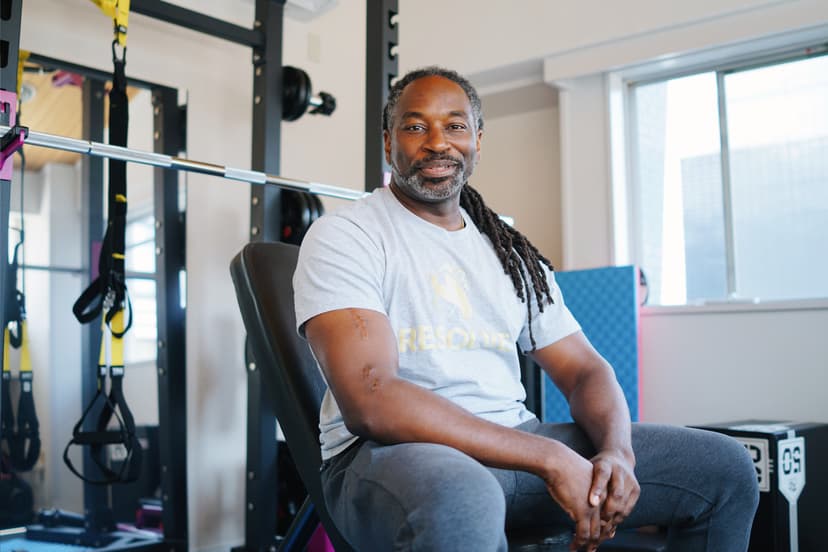
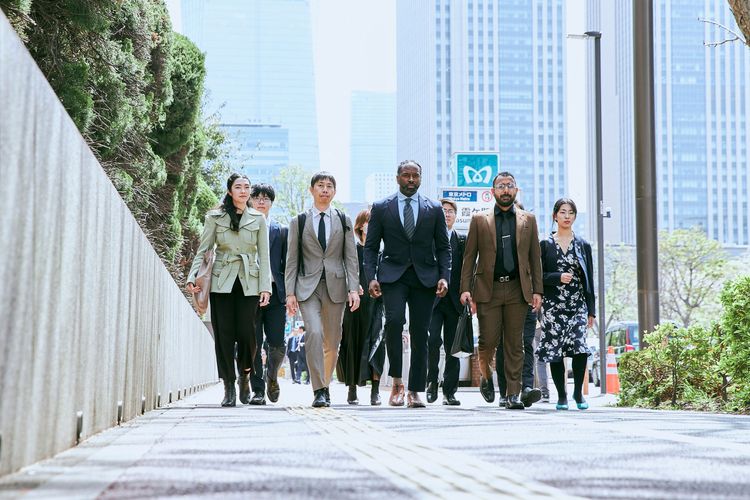
The plaintiffs and police officers in the Lawsuit to End Racially Discriminatory Police Questioning will testify at the Tokyo District Court on September 29 and October 6. We spoke with plaintiff Maurice Shelton about the injustice he experienced when police stopped him, and why he continues to fight for change.
SHARE
On April 13, 2021, Maurice Shelton was riding his motorcycle when police stopped him for questioning at an intersection in Tokyo.
—Where were you headed that day?
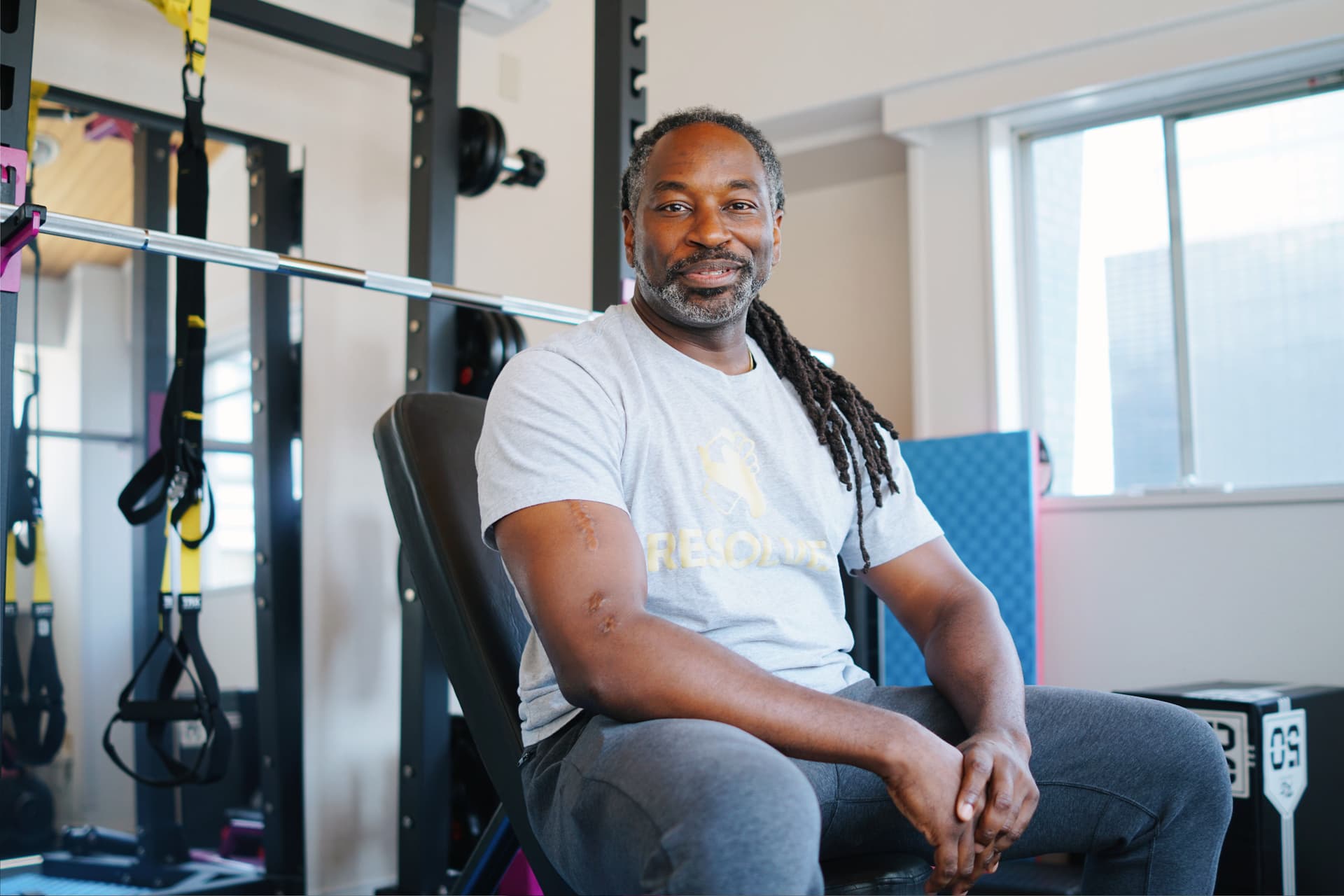
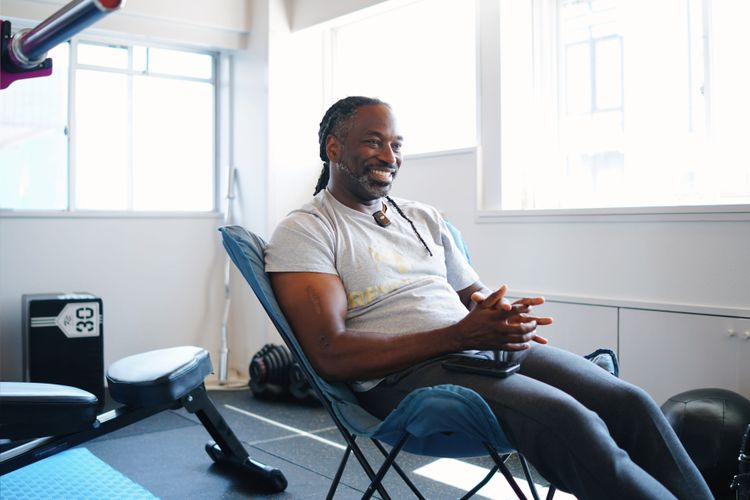
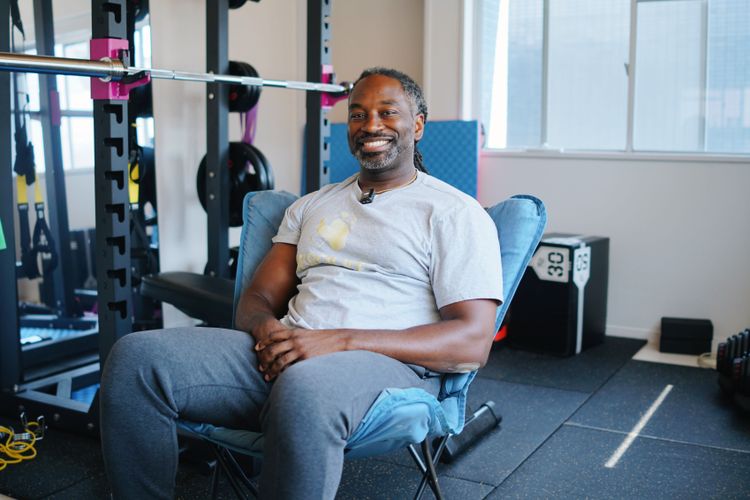
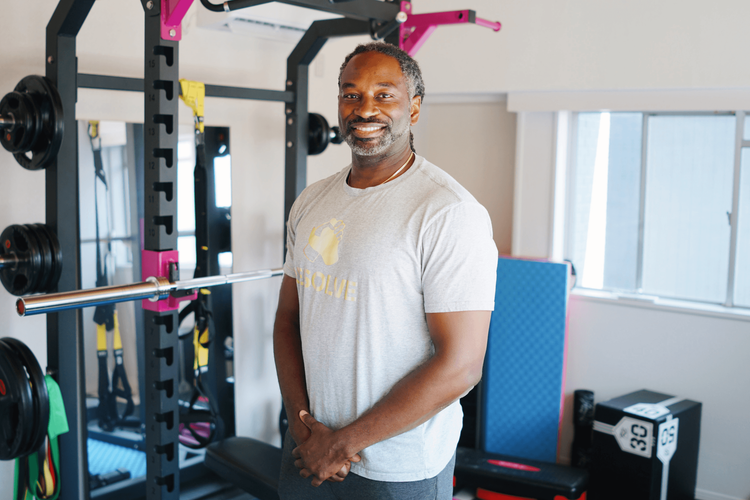
During our interview at the gym he runs, Shelton laughed as he answered.
“Every time I tell this story, it sounds really silly. I was actually on my way to pick up some extra peanuts from someone I knew. She’d bought too many by mistake.”
“It was just an ordinary day, like any other.”
But that ordinary day was interrupted. At the officers’ request, Shelton pulled over to the side of the road and showed his driver’s license and residence card. Believing there was nothing wrong with his driving and that he had committed no traffic violation, he asked why he had been stopped. He received no answer that made sense to him.
Instead, he says, he was asked where he came from, what he did for work, and whether he really lived at the address on his card.
Originally from the United States, Shelton has lived in Japan for more than ten years in total. He is married to a Japanese woman and has permanent resident status. He is a father of five and a business owner.
But where he came from, what he did for a living, and where he lived—what did any of that have to do with his driving that day?
Reflecting on that day, Shelton says:
“If I’d committed a traffic violation, they could have just warned me and given me a ticket. But they were asking questions that clearly had nothing to do with it, and my annoyance started turning into anger. They were treating me with suspicion, making it seem like I just didn’t belong here.”
There was something he wanted to say to the officer in front of him.
“I’m a human being, just like you. I’m working hard to feed my kids and my family, living as part of Japanese society. I’m a human being, just like you—that’s what I wanted to say.”
Racial profiling’s deep roots in Japan’s police organizations
Racial profiling is the practice of police selecting people for investigation or questioning solely on the basis of race, skin color, ethnic origin, or similar characteristics, without reasonable grounds for suspicion.
Filed in January 2024 against the national government, the Tokyo Metropolitan Government, and Aichi Prefecture, the Lawsuit to End Racially Discriminatory Police Questioning seeks to eliminate police questioning based on racial profiling. Shelton is one of the plaintiffs.
The plaintiffs argue that each of them was targeted solely because of race, skin color, or similar characteristics, in violation of Japan’s Constitution and international treaties to which Japan is a party, including the International Convention on the Elimination of All Forms of Racial Discrimination and the International Covenant on Civil and Political Rights.
They also seek to hold the national government accountable. Although the racial discrimination convention requires the government to take active measures to eliminate discrimination, they argue that it has failed to investigate police practices or provide the guidance and oversight needed to prevent discriminatory questioning.
According to the plaintiffs’ legal team, previous cases in Japan have challenged the lawfulness of individual instances of police questioning. This case, however, is unprecedented in challenging the existence and lawfulness of the discriminatory practice itself.
More than two and a half years after filing the lawsuit, the plaintiffs have built a body of evidence to support their argument: what Shelton experienced that day was only the tip of the iceberg of racial profiling deeply rooted in Japan’s police organizations.
In a survey conducted by the plaintiffs’ legal team in 2024, 12.8% of respondents with Japanese nationality reported having been questioned by police in public spaces or outdoors in the previous five years, compared with 71.1% of respondents with foreign nationality—a proportion approximately 5.6 times as high.[1]
Among foreign-national respondents who had experienced police questioning, 17.0% answered, “I felt as though I was being seen as a criminal,” and 14.0% said it made them feel they were not being seen as members of society.
The plaintiffs also submitted as evidence an anonymous interview in which a former Aichi Prefectural Police officer, whose duties had included police questioning, spoke to a journalist about practices within the force.
The former officer described quotas for police questioning and said that meeting those quotas affected officers’ prospects for promotion and other aspects of their careers. To increase their numbers, officers would routinely stop people who appeared to be foreign, even when they were doing nothing suspicious, he said.
Hearing this account left Shelton with mixed feelings: reassurance that their claims had been corroborated, but also bitterness that the officer had not spoken up while still serving.
“Everything he said was what we all knew already.”
The defendants—the national government, the Tokyo Metropolitan Government, and Aichi Prefecture—dispute the plaintiffs’ claims. They maintain that they provide appropriate training and guidance to ensure that officers do not question people solely because of their appearance, and that the discriminatory practice alleged by the plaintiffs does not exist.
The national government also challenges the methodology of the plaintiffs’ survey and the credibility of the former officer’s account. Aichi Prefecture likewise disputes the credibility of that account.
Taking the stand to push for change
At the hearings on September 29 and October 6, Shelton, his fellow plaintiffs, and the officers who questioned them will take the stand. Each will give their account of what happened on the days in question.
Shelton wants to hear how the officers explain stopping him that day without issuing a traffic ticket.
By appearing in court and testifying himself, he also wants to make clear that, whatever opposition he faces, he will not back down. He will keep fighting for change.
“Since becoming a plaintiff in this case, I’ve been asked, ‘Why did you decide to speak up?’ But I’ve always been fighting—long before this lawsuit began.”
“Martin Luther King Jr., Malcolm X. Paul Robeson, who fought racism as a singer, actor, and activist. George Jackson, a human rights activist whose writings exposing injustice from prison profoundly influenced movements challenging power and defending human rights around the world.”
“I’m nowhere near the stature of those people. But I’ve continued my activism, speaking out as a member of the anti-war organization Black Alliance for Peace and founding Black Rad Collective here in Japan. I recognize myself as following a Black radical tradition, carrying forward what those before us learned, taught, and passed down.[2]”
“It is a tradition that has consistently spoken truth to power and resisted the status quo despite the odds against justice. This lawsuit is a continuation of that struggle. And if you look more closely, you’ll see that it’s not just me. There are so many other people fighting their own battles.”
Shelton is also thinking of his children. Thirty or forty years from now, when they are closer to the age he is today, he does not want them to face the same problems he struggled to change.
The struggle handed down by those who came before him will likely outlive him. Even so, this particular injustice—racial profiling—must, somewhere, someday, be brought to an end.
Shelton hopes this lawsuit can make that “someday” a reality.
“What I will not do is stop fighting for our place in this society. Like everyone else, I belong here—just as much as anybody else.”
Public interest litigation seeks to challenge injustice through the courts. LEDGE brings together lawyers, researchers, campaigners, and other specialists to support that work. Our mission is to change what seems unchangeable. Alongside everyone who wants to live freely as themselves in a fair society, we work to change the rules that shape our lives.
Through these articles, we explore the issues behind public interest litigation and hear from the plaintiffs who speak up and the legal teams who support them.
For more information and the latest updates on the Lawsuit to End Racially Discriminatory Police Questioning, visit the CALL4 case page. Please also consider contributing to the crowdfunding campaign to help fund the legal team’s work.
[1] Survey on Police Questioning: Conducted online in August–September 2024, the survey had 943 respondents aged 20–59: 521 Japanese nationals living in the Kanto region and 422 foreign nationals who had lived in Japan for at least five years. See the survey report for details.
[2] Black Radicalism: A current of thought and activism seeking Black liberation through resistance to colonial domination, economic exploitation, and other forms of oppression intertwined with racism. It seeks to transform the social structures that produce discrimination.