The “Lawsuit for Under-18s’ Freedom to Engage in Election Campaigning” challenges provisions of the Public Offices Election Act that impose a blanket ban on election campaigning by those under 18 and penalize those who violate it. The plaintiffs argued that these provisions infringe on young people’s freedom of political expression and violate the Constitution.
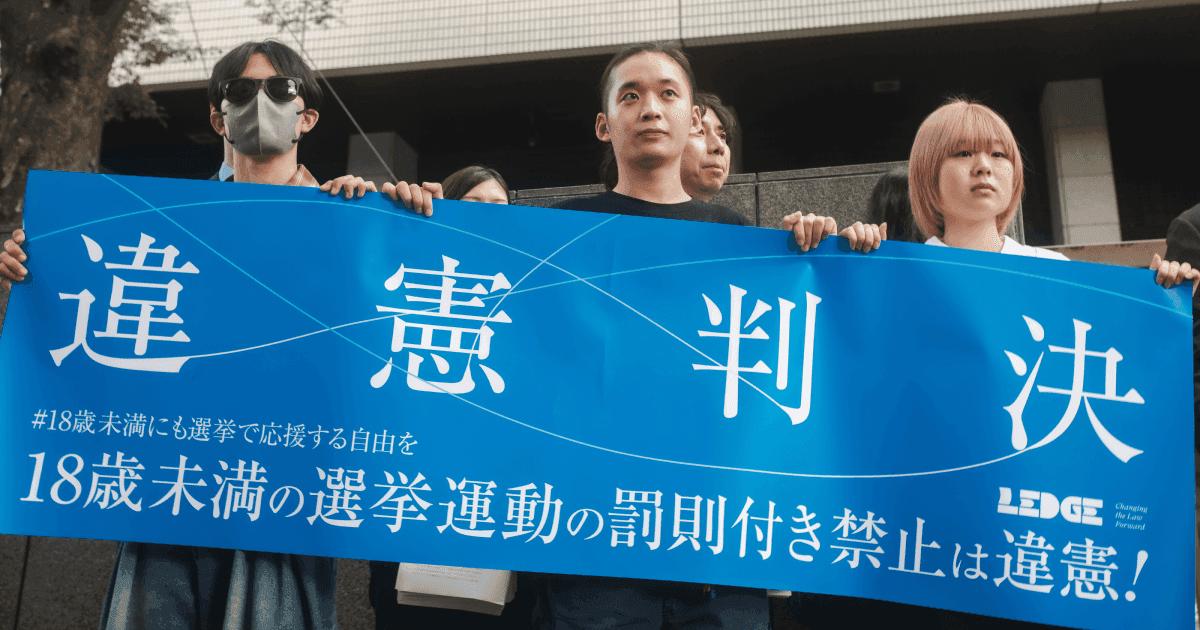
On September 25, the Tokyo District Court ruled that the provision prohibiting election campaigning by those under 18 is unconstitutional.
The court recognized that the freedom to engage in election campaigning falls within the freedom of political expression, affirming that it is an important constitutional right that extends to minors. It found no reasonable justification for the current provisions prohibiting election campaigning by those under 18 and penalizing those who violate the ban.
This landmark ruling responds to the voices of young people who wish to support candidates in elections and marks a significant step toward expanding opportunities for political participation.
For LEDGE, which seeks to change society’s rules through public interest litigation, the ruling also marks a major step toward turning the plaintiffs’ voices into concrete social change. We extend our heartfelt thanks to everyone who has supported this lawsuit.
The full judgement and its summary are available at the CALL4 case page.
About the Lawsuit for Under-18s’ Freedom to Engage in Election Campaigning
“Election campaigning” refers to activities carried out during an election period with the aim of ensuring the victory of a particular candidate. Under the Public Offices Election Act, young people under 18 are prohibited from engaging in any election campaigning and are themselves subject to criminal penalties for violations.
In this lawsuit, four plaintiffs, all of whom were high school students when the lawsuit was filed, have come forward seeking to abolish restrictions that infringe on the freedom of political expression for young people under 18 who wish to voluntarily support candidates in elections.
The plaintiffs argued that election campaigning in support of candidates falls within the freedom of political expression guaranteed by the Constitution, and that there was no concrete basis for a blanket ban extending even to voluntary participation by those under 18. They also argued that concerns about adults mobilizing young people could be addressed by regulating the adults involved, and that punishing young people themselves contradicted the stated aim of protecting them.
The government, by contrast, argued that the prohibition was necessary to ensure fair elections and protect minors, and that the Diet had broad discretion in designing the electoral system. It also argued that the penalties served to ensure fair elections and that imposing criminal penalties on those who violated the prohibition was justified.