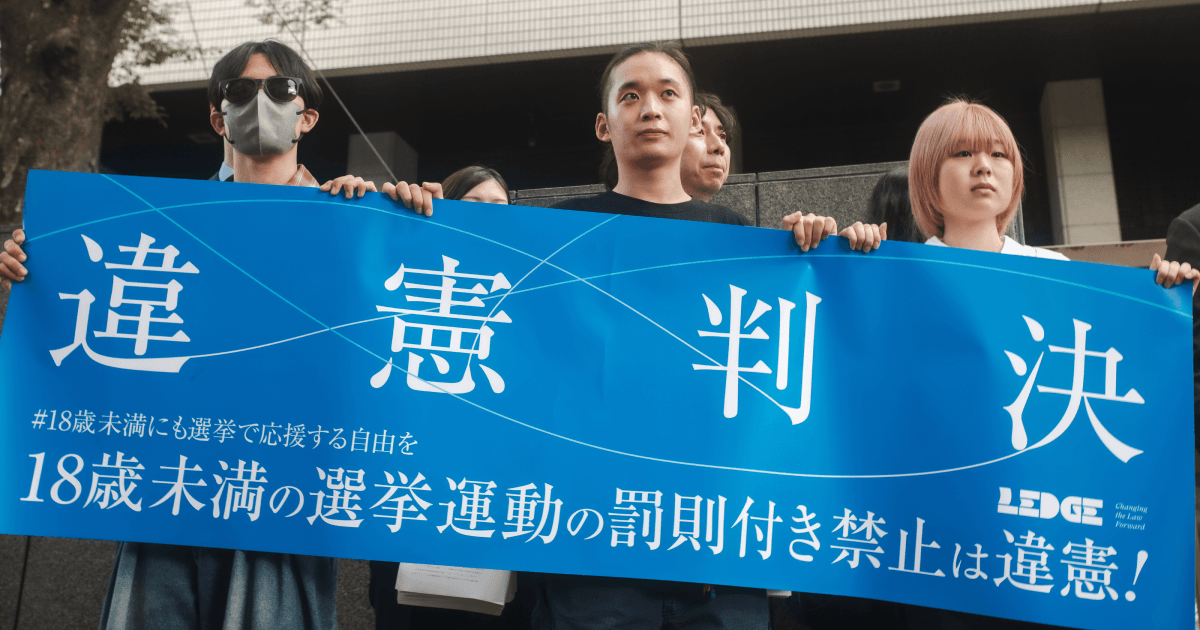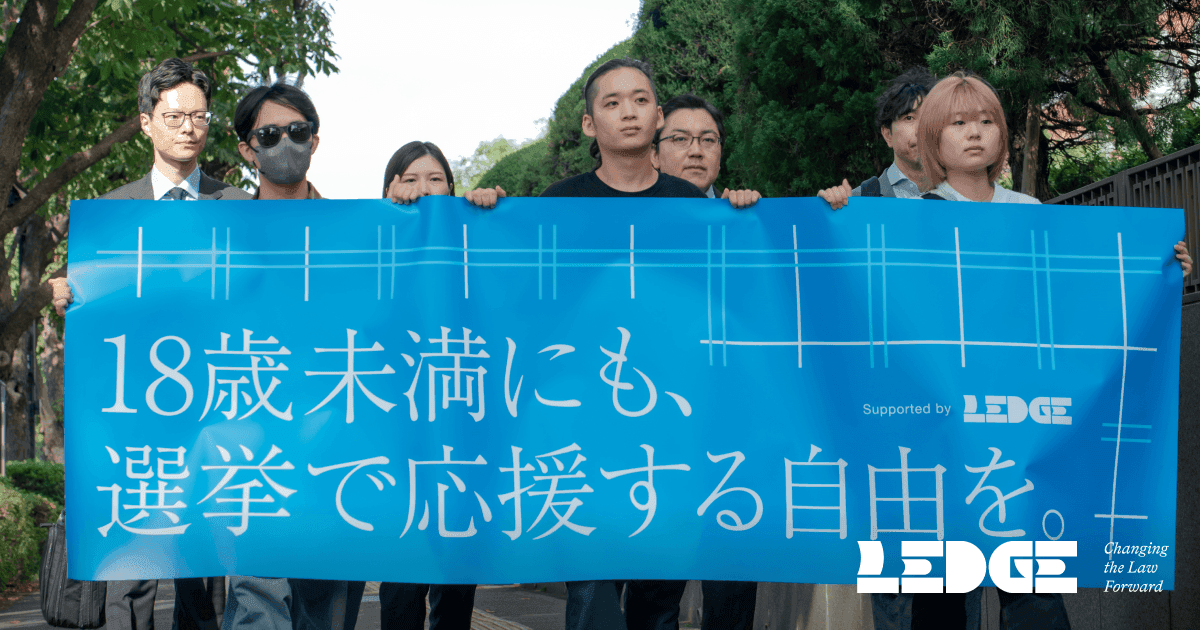
On October 7, 2026, the plaintiffs in the Lawsuit for Under-18s’ Freedom to Engage in Election Campaigning appealed the Tokyo District Court’s judgment dismissing their claims. The lawsuit challenges the constitutionality of provisions of the Public Offices Election Act that prohibit election campaigning by minors, arguing that they violate young people’s freedom of political expression.
The Tokyo District Court’s judgment, delivered on September 25, marked a significant step forward: it expressly recognized that minors’ freedom to express political views through election campaigning is a fundamental human right protected under Article 21, paragraph 1 of the Constitution of Japan.
However, the court upheld the constitutionality of the provisions prohibiting the use of minors in election campaigning and imposing penalties for violations. It also rejected the plaintiffs’ claims for compensation from the state and other relief, even though the prohibition on campaigning by minors—which the court found unconstitutional—had remained in place for more than 70 years.
For details of the appeal, please read the statement issued by the plaintiffs’ legal team.
Since the lawsuit was filed in February 2025, the Lawsuit for Under-18s’ Freedom to Engage in Election Campaigning, supported by LEDGE, has continued with the generous support of many people. We ask for your continued support as the plaintiffs move forward.
About the Lawsuit for Under-18s’ Freedom to Engage in Election Campaigning
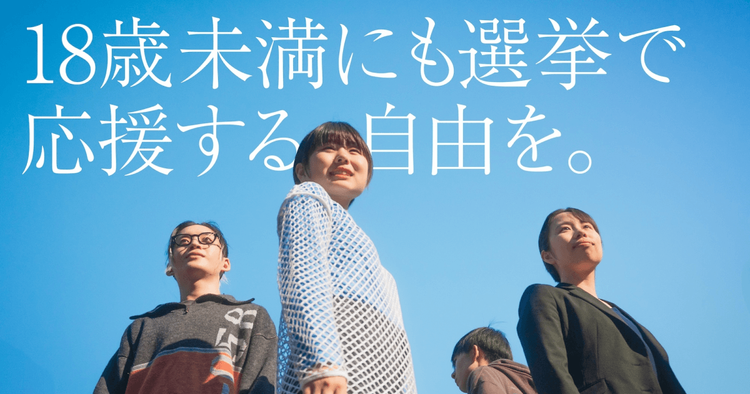
“Election campaigning” refers to activities carried out during an election period with the aim of ensuring the victory of a particular candidate. Under the current Public Offices Election Act, minors are prohibited from engaging in election campaigning, and violations result in penalties.
In this lawsuit, four high school students have come forward as plaintiffs seeking to abolish this prohibition. They argue that the current rule infringes on the freedom of political expression for young people under 18 who wish to voluntarily support candidates in elections.