DONATIONWith Just a Piece of Paper, Freedom, Life, and Dignity were Easily Taken Away. The Fight to Put an End to "Hostage Justice" - ARTICLE - LEDGE, a specialist team for public interest litigation
With Just a Piece of Paper, Freedom, Life, and Dignity were Easily Taken Away. The Fight to Put an End to "Hostage Justice"
"Hostage justice" involves the prolonged detention of suspects and defendants accused of some kind of crime. To change this situation, we spoke with Tomoya Asanuma, plaintiff in the "End Hostage Justice!" Lawsuit, who began a lawsuit against the government. We spoke to him about the reality of his 110-day detention and his thoughts on the lawsuit.
SHARE
[*Translated by Google translate]
If you were arrested, what would happen? Regardless of your guilt or innocence, few people may realize the harshness of the days that await you.
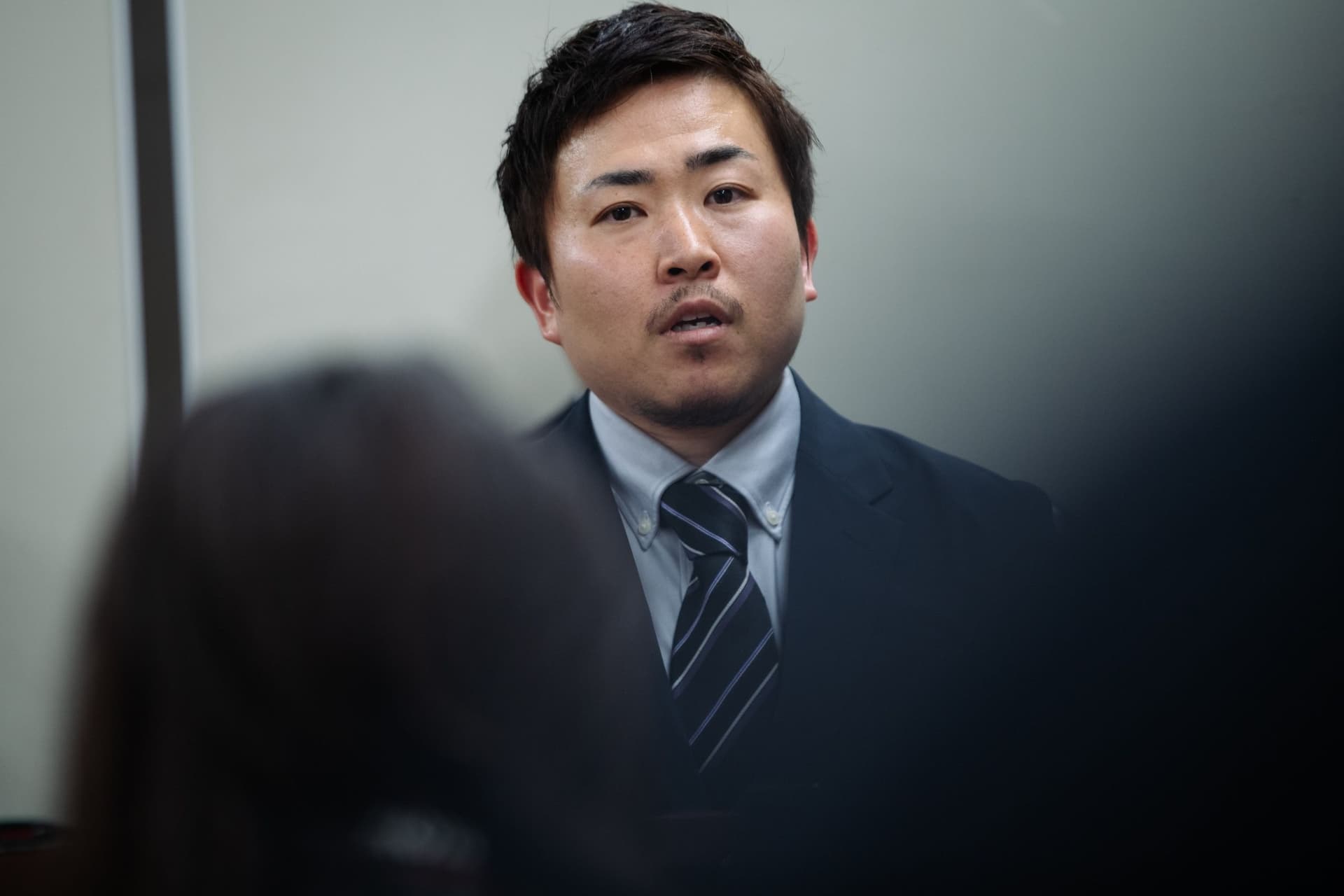
Tomoya Asanuma, a plaintiff in the "End Hostage Justice!” Lawsuit supported by LEDGE, was one of those who "knew nothing."
What happened the day he was arrested?
The "End Hostage Justice!” Lawsuit argues that it is unconstitutional for people arrested on suspicion of some kind to be detained for long periods of time before being sentenced, and to be forced to cooperate with investigations while their freedom and personal lives are held hostage.
This is Japan's first class-action lawsuit, challenging the constitutionality of legal provisions that enable judicial infringement of human rights in Japan's "hostage justice" system, which has been criticized both domestically and internationally.
Asanuma's detention began on March 14, 2024. Police officers suddenly stormed into his Tokyo home and arrested him, then took him to a police station in Aomori Prefecture.
All he managed to take with him was a bag stuffed with a change of clothes and a business card on which he had quickly written a friend's phone number. His cell phone was immediately confiscated, and he was not allowed to contact anyone outside of work.
No matter how many times he pleaded, "That's not true, and I didn't do it," no one listened. He was handcuffed and strapped to his waist before being forced onto a Shinkansen train.
What would become of him? "When I was arrested, I had no idea what was going on. I was extremely anxious until my lawyer came to visit me at the detention center and explained what would happen next." Asanuma recalled his feelings at the time.
Treated like a "criminal" just for being arrested
After an arrest, the police first conduct an interrogation and decide within 48 hours whether to refer the suspect to the public prosecutor's office. After referral, the prosecutor requests detention, and if the court approves, the detention period can be extended for up to 20 days until a decision is made on whether to indict.
If an indictment is made, a trial will be held and the suspect will remain in detention until a verdict is reached, unless the defendant's request for bail is granted. There is no maximum detention period.
Asanuma continued to deny the charges from the time of his arrest, but was indicted on assault charges on April 4th. He subsequently requested bail four times, all of which were denied. He remained in detention for 110 days until his fifth request for bail was finally granted after his first trial.
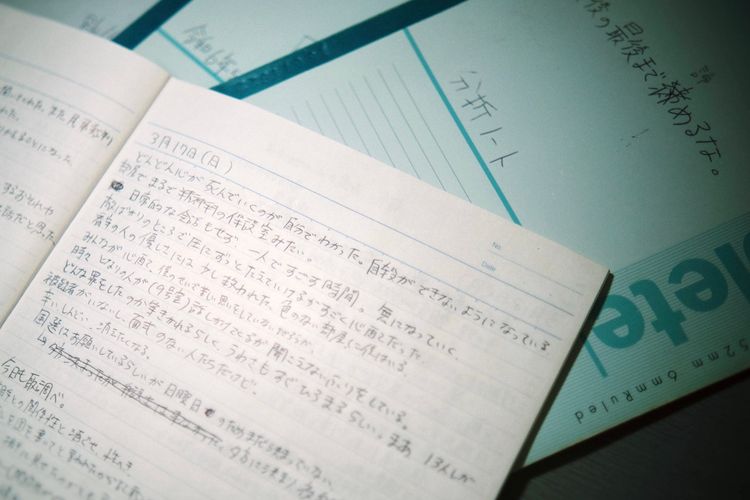
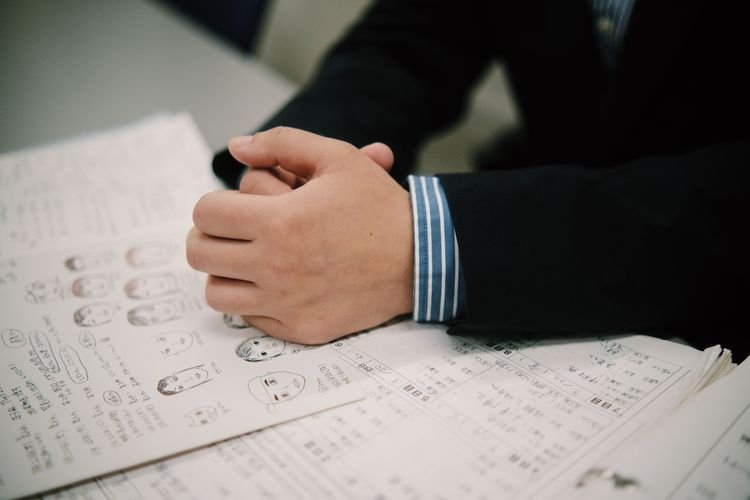
He recorded his daily detention in detail in a notebook given to him by friends who came to visit him. | LEDGE
"I realized that my heart was gradually dying." "It's painful. It's tiring. I want to disappear."
These are the words Asanuma wrote in a notebook given to him by his friends on the fourth day of his detention.
"While in detention, I felt like an animal in a zoo. Suddenly, I was put in a cage and constantly watched by the guards. Everything in the detention center was under the guards' control, so I had almost no freedom to do anything of my own volition, even drinking water or brushing my teeth."
"Even when I went to the toilet or took a bath, which I was only allowed to do twice a week, I was constantly being watched by guards. I had only just been arrested, and even before my trial had started, I felt like I was being treated like a criminal."
Along with all his freedom and privacy, his name was also taken away.
During his detention, Asanuma was assigned the number "48." Whether it was during morning roll call or when he was called in for questioning, he was constantly called "48," and he was overcome with the feeling that he had become just another number.
In his small cell, cut off from the outside world, Asanuma had no choice but to endure the hours, almost forgetting his own name.
Unable to even consume a drink, he was called into the interrogation room day after day. Asanuma, who followed his lawyer's advice and remained silent, was not immune to the irritation of the investigators.
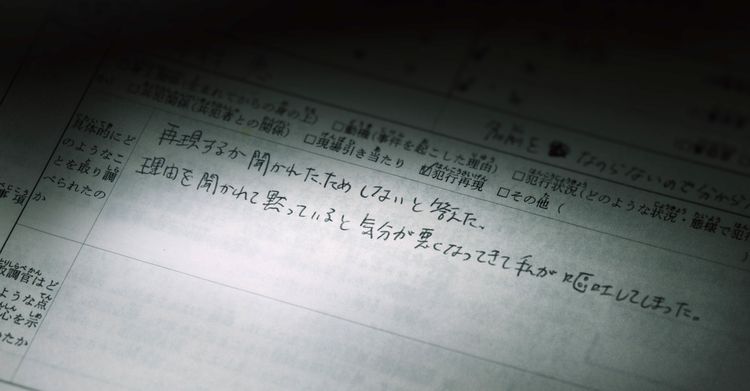
They forced him to sit in the interrogation room for hours, snapping his fingers, fidgeting, and making loud noises with thick file folders. On the day he was asked to reenact the incident, he suddenly felt extremely nauseous and vomited on the spot.
A record of the day he was asked to reenact the incident as part of the interrogation. "The detective asked me if I wanted to reenact it, and I said no. When they asked me why, I remained silent, and I felt so sick that I vomited." | LEDGE
"The longer I was cut off from society, the more anxious and anxious I became, wondering if my family was okay and what would happen to my future life and work. There were many times when I found myself wondering how long I would have to stay here, and whether I would be released if I just gave up and said, 'I did it.'"
The only ray of hope that kept Asanuma's heart afloat during those days was his family and friends, who visited him daily. The first time his mother visited him, he ruminated over and over in his mind about her emaciated appearance, her bloodshot eyes, and the voice that told him, "I believe in you."
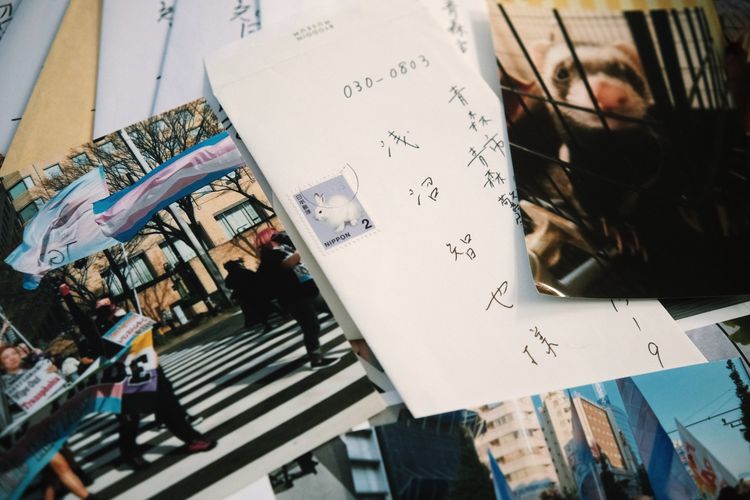
Photos and letters sent to him by family and friends during his detention. "No matter how long I was detained, there were people who never forgot me as a person. Their presence meant the most to me." | LEDGE
In Japan, the right to bail has "died"
Unable to endure prolonged detention, inmates are forced to confess. At the root of this "hostage justice" is the problem of not recognizing the "right to bail," which should be recognized.
Article 89 of the Code of Criminal Procedure, which governs the bail system, states that when a defendant requests bail, it must be granted in all cases, with certain exceptions specified in the same article. This provision is intended to protect defendants from "physical restraint," the ultimate restriction on human rights.
However, one of the "exceptions" is "when there is reasonable cause to suspect that the defendant will destroy evidence" (Article 89, Paragraph 4, of the Code of Criminal Procedure), and this is the reason for the vast majority of denied bail requests.
Is it actually possible to destroy evidence? How is evidence destroyed? At some point, courts began to mechanically deny bail based solely on abstract "suspicions" without specifically examining such individual circumstances. As a result, the exceptions have become the norm, and the bail system, which is meant to protect the defendant's human rights, has "died," according to the lawyers in the "End Hostage Justice” Lawsuit.
In the notebook recording his days in detention, he also drew portraits of family and friends who visited him. | LEDGE
In Asanuma's case, all of his denied bail requests were based on the "risk of destroying evidence." One of the requests was made by Asanuma himself, handwriting the request from his cell, but the result was the same.
"My applications for bail had been denied repeatedly on the grounds of 'risk of destruction of evidence,' so I wrote that more than a year had passed since the incident, making it practically impossible to destroy evidence. I also wrote that as conditions for bail I would not own a cell phone, that I would live at my parents' house, far away from anyone involved in the incident, and that I was determined to fight the trial to the end to prove my innocence, and would not run away. Therefore, I was seeking bail to restore my human rights."
"I thought that if I wrote it clearly, the court would understand."
However, what Asanuma received was the same impersonal rejection notice as before.
"It was as if they were telling me, 'You have to stay here forever.' With just one piece of paper, my freedom, my livelihood, and my human dignity could easily be taken away. I felt that I had too much to lose."
Ten months after his arrest, in January 2025, Asanuma was acquitted.
To put an end to hostage justice as soon as possible
The "Put an end to hostage justice! Lawsuit" was filed in February 2025, and four plaintiffs, including Asanuma, who have suffered as a result of "hostage justice," are suing the government, alleging that the provisions of the Code of Criminal Procedure, which provide the basis for detention and bail, violate the Constitution.
The government, on the other hand, argues that these provisions are necessary "to properly administer criminal trials and exercise the state's right to criminal punishment," and that "the Constitution itself permits them as necessary and unavoidable restrictions on personal freedom."
"I was able to continue fighting without giving up because I had people who supported me at all times. But there are many people who are not like that. That's why I had no hesitation in becoming a plaintiff," says Asanuma.
"Because so many people are still suffering, I want more people to think about the issue of hostage justice. I want people to understand the cruelty of ongoing human rights violations by the judicial system, and that what I experienced could happen to anyone."
"As the name of our lawsuit suggests, we want to put an end to this situation as soon as possible. That's my hope."
LEDGE (Photo by Amemori Mariki)
"Public lawsuits" aim to change social irrationality through the power of the judicial system. LEDGE is a team of lawyers, researchers, campaigners, and other experts formed to support these public lawsuits. We work with all people who want to live their lives in a fair society, true to themselves, to change the law forward.
These articles will cover the background and topics of public lawsuits aimed at resolving social issues, as well as the thoughts of the plaintiffs who have spoken out and the legal team supporting them.
Details and the latest information on the“End Hostage Justice!” Lawsuit can be found on the CALL4 case page. We also ask for your support in crowdfunding, which allows us to provide comprehensive legal support.